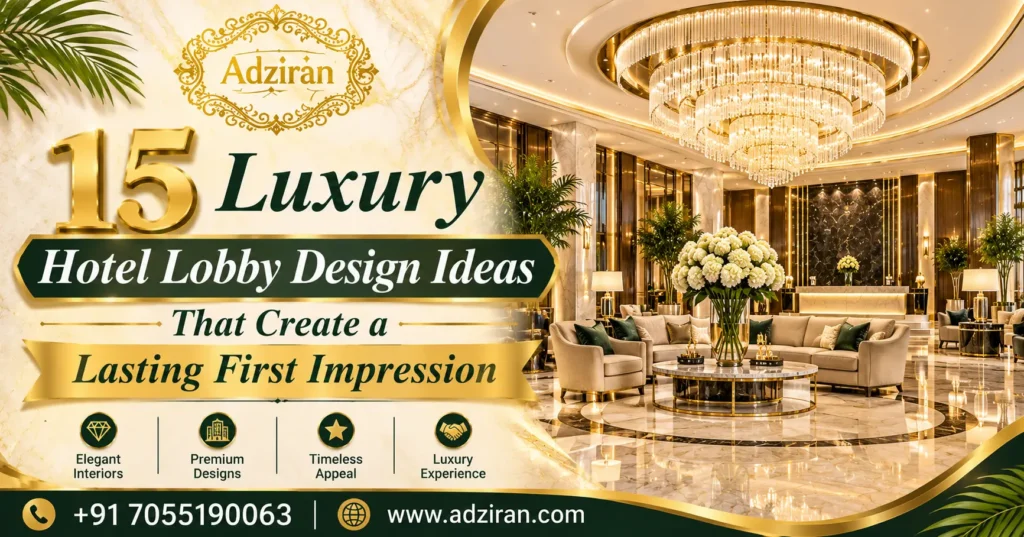
A luxury hotel lobby is more than an entrance. It is the first experience guests have of a hotel’s style, comfort and identity. From elegant marble flooring to statement lighting, every design detail helps shape that first impression.
In today’s competitive hospitality industry, a well-designed lobby can make a hotel more memorable. Guests expect spaces that look beautiful, feel welcoming and offer comfort. At the same time, hotel owners and designers need materials that combine visual appeal with durability and easy maintenance.
In this guide, Adziran explores practical luxury hotel lobby design ideas, including premium marble finishes, decorative inlay patterns, statement walls, lighting concepts and furniture choices. Whether you are designing a boutique hotel or a grand five-star property, these ideas can help you create a lobby that feels timeless and distinctive.
What Is Luxury Hotel Lobby Design?
Luxury hotel lobby design is the process of creating an elegant, comfortable and functional entrance space that reflects a hotel’s identity. It brings together architecture, materials, lighting, furniture, artwork and layout to create a welcoming experience for guests.
Traditionally, hotel lobby design focused on grand entrances, impressive chandeliers, expensive materials and formal reception areas. These features still matter. However, modern luxury is not only about how much a space costs. It is also about how thoughtfully the space works.
A successful lobby should:
- Create a strong first impression.
- Make check-in and guest movement simple.
- Offer comfortable places to sit and relax.
- Reflect the hotel’s location and brand identity.
- Use durable materials that suit daily hotel operations.
- Feel welcoming at different times of the day.
How Hotel Lobby Design Is Evolving
Modern guests expect more than a beautiful reception area. They want a space where they can relax, meet people, work, enjoy a drink or simply take in the surroundings.
This has changed the way designers approach luxury hotel interiors. A lobby is now often planned as a flexible social space rather than just a place to check in.
Technology also influences the design process. Designers can use 3D models, digital material samples and virtual walkthroughs to review layouts before construction. These tools help clients understand how flooring, lighting, furniture and decorative details may look together.
For online content, this also means that useful design guidance should answer real questions clearly. Instead of simply listing luxury trends, a helpful article should explain which materials work well, where to use them and what to consider before choosing them.
What Makes a Hotel Lobby Design Successful?
A beautiful lobby needs more than expensive furniture. It should balance appearance, comfort, durability and practical use.
1. Experience and Craftsmanship
The quality of materials and installation affects how a lobby looks and performs over time. Natural stone, detailed woodwork and custom metal features can add character when they are selected and installed with care.
2. Clear and Useful Information
When planning a lobby, clients should be able to understand the design choices. Explain the benefits, maintenance needs and suitable applications of each material.
3. A Layout That Works
Reception counters, seating, entrances and circulation routes should be easy to understand. Guests should not have to search for the reception desk or move through crowded furniture arrangements.
4. A Consistent Design Identity
The floor, walls, ceiling, lighting and furniture should feel connected. A clear design theme makes the space memorable without making it look overcrowded.
5. Reliable Material Selection
A hotel lobby receives regular foot traffic. Therefore, flooring, wall finishes and furniture should be selected according to their intended use, cleaning needs and expected wear.
10 Luxury Hotel Lobby Design Ideas
The following luxury hotel lobby design ideas combine visual impact with practical planning. They can be adapted for boutique hotels, heritage properties, resorts and large hospitality projects.
1. Create a Grand Entrance with Marble Flooring
Marble flooring can give a hotel lobby a timeless and sophisticated appearance. Its natural patterns, smooth finish and range of colours make it suitable for both classic and contemporary interiors.
For a grand entrance, consider:
- White marble with subtle grey veining.
- Beige marble for a warm and welcoming feel.
- Dark marble borders for contrast.
- Large-format marble tiles for a clean visual flow.
- Decorative stone patterns near the entrance or reception area.
Adziran design insight: A plain marble floor can look elegant, but custom stone inlay can make it more distinctive. A carefully planned floor medallion, geometric border or floral pattern can create a signature feature for the hotel.
Choose flooring based on slip resistance, cleaning requirements, expected foot traffic and the finish recommended for the specific stone.
2. Add Custom Marble Inlay Patterns
Custom marble inlay is one of the most distinctive ways to add artistic detail to a luxury hotel lobby. It involves setting carefully shaped pieces of contrasting stone or other materials into a base surface to create patterns and motifs.
Popular design options include:
- Floral and botanical patterns.
- Geometric borders.
- Circular floor medallions.
- Traditional motifs inspired by local heritage.
- Custom patterns based on a hotel’s logo or identity.
For example, a heritage hotel could use floral inlay inspired by traditional architecture. A contemporary hotel could choose a simple geometric design with a limited colour palette.
The key is balance. Use detailed inlay in selected areas, such as the main entrance, central lobby floor or reception zone. This helps the craftsmanship stand out without making the entire space feel busy.
Adziran specialises in bespoke marble and stone inlay, including custom flooring patterns, grand medallions and architectural details. Explore its bespoke inlay work to understand how traditional craftsmanship can be adapted for modern spaces.
3. Design a Statement Reception Counter
The reception counter is one of the first features guests notice when entering a hotel. It should be visually impressive while remaining comfortable and practical for staff.
Consider these design choices:
- A curved marble reception desk.
- A combination of natural stone and brass.
- Backlit onyx or translucent stone accents.
- Fluted wood panels for texture.
- A clean, uncluttered counter surface.
Make sure the counter has enough working space for computers, documents and guest services. Also consider accessible counter sections and suitable lighting for staff.
4. Use Statement Chandeliers and Layered Lighting
Lighting can change the entire mood of a hotel lobby. A large chandelier creates a focal point, while smaller light sources make the space feel comfortable and welcoming.
Use a combination of:
- Ambient lighting: Provides general illumination.
- Accent lighting: Highlights artwork, stone details and feature walls.
- Task lighting: Supports reception work and reading areas.
- Decorative lighting: Adds visual character through chandeliers and pendant lights.
For a double-height lobby, a sculptural chandelier can draw attention upwards. In a smaller lobby, elegant pendant lights or concealed ceiling lighting may create a more balanced result.
Avoid excessive brightness and harsh glare. Lighting should complement the materials and help guests feel comfortable.
5. Choose a Warm and Timeless Colour Palette
A carefully selected colour palette makes a hotel lobby feel polished and connected. Neutral colours are popular because they work well with natural stone, wood, metal and different styles of furniture.
Consider these combinations:
| Colour combination | Design effect |
| Ivory and champagne gold | Elegant and bright |
| Beige and walnut brown | Warm and welcoming |
| White and charcoal | Modern and refined |
| Taupe and brushed brass | Soft and sophisticated |
| Deep green and cream | Rich and nature-inspired |
Use one or two main colours, then add smaller accents through cushions, artwork, decorative objects and furniture.
6. Create an Elegant Feature Wall
A feature wall gives the lobby a memorable focal point. It can sit behind the reception counter, near the main entrance or along a key guest pathway.
Some attractive options include:
- Bookmatched marble panels.
- Backlit onyx features.
- Decorative stone inlay.
- Brass or metal detailing.
- Textured wood panels.
- Large-scale artwork inspired by local culture.
A feature wall should support the overall design rather than compete with every other element. If the wall has a bold pattern, keep nearby furniture and flooring more restrained.
7. Bring Nature into the Lobby
Natural elements can make a grand lobby feel more relaxed. Plants, natural textures, daylight and water features help soften hard architectural surfaces.
You can introduce nature through:
- Large indoor plants or carefully selected trees.
- Green walls in suitable locations.
- Natural stone and timber finishes.
- Courtyards visible from the lobby.
- Water features where maintenance and safety allow.
Select plants according to the available daylight, indoor temperature and maintenance schedule. A natural design feature should remain healthy and attractive throughout the year.
8. Add Comfortable and Well-Planned Seating
A hotel lobby should offer more than a place to stand while checking in. Comfortable seating encourages guests to relax, meet visitors or wait for transport.
Create different seating zones for different needs:
- Lounge seating for small groups.
- Individual chairs for guests who want privacy.
- Sofas near windows or attractive views.
- Small tables for coffee and informal meetings.
- Quiet corners away from busy entrances.
Choose upholstery that suits the hotel’s expected use. It should feel comfortable but also be suitable for regular cleaning and maintenance.
9. Reflect Local Culture Through Art and Craftsmanship
A luxury hotel becomes more memorable when its interiors tell a story. Local art, regional materials and traditional craftsmanship can give the lobby a strong sense of place.
For example:
- A hotel in Agra could use floral stone inlay inspired by Mughal craftsmanship.
- A Rajasthan property could include traditional patterns and locally inspired colours.
- A coastal resort could use natural textures and artwork influenced by the sea.
- A heritage property could display carefully selected regional craft pieces.
The aim is not to fill the lobby with decorative objects. Instead, choose a few meaningful details that connect the interior to its location.
10. Combine Luxury with Smart Space Planning
Even the most beautiful lobby can feel uncomfortable if its layout is poorly planned. Good space planning helps guests move easily from the entrance to reception, lifts, restaurants and lounge areas.
Before finalising the design:
- Keep the main entrance and reception route clear.
- Avoid placing large furniture in busy walkways.
- Provide enough space for luggage and waiting guests.
- Separate quiet seating from high-traffic areas.
- Plan suitable lighting and power points.
- Consider accessibility and guest movement.
A well-planned lobby feels natural to use. Guests should be able to understand the space without needing directions at every step.
Bonus Tips for a More Refined Hotel Lobby
Small design decisions can make a major difference to the final result. Keep these points in mind:
- Use fewer, better materials: A focused material palette often looks more refined than too many competing finishes.
- Plan maintenance early: Check cleaning methods, stain resistance and repair needs before selecting flooring and upholstery.
- Control noise: Soft furnishings, acoustic wall panels and thoughtful ceiling treatments can help reduce unwanted noise.
- Use artwork with purpose: Choose pieces that support the hotel’s identity and work with the scale of the lobby.
- Review samples under real lighting: Marble, metal and fabric can look different under daylight and artificial light.
- Create a consistent guest experience: Carry selected colours, materials and design details into nearby corridors and public areas.
How Adziran Can Add Distinctive Craftsmanship to Luxury Hotel Lobbies
In a luxury hotel, carefully selected details can make the difference between a beautiful interior and a memorable one. Custom stone and marble inlay can add that distinctive touch.
Adziran focuses on bespoke marble, stone and architectural inlay work. Its specialist applications include:
- Custom marble flooring and grand medallions.
- Geometric and floral stone inlay patterns.
- Architectural wall panels and decorative features.
- Custom motifs for commercial and institutional spaces.
- Bespoke detailing designed around a project’s architectural concept.
The design process can begin with a concept and motif, followed by material selection, precision crafting and installation planning. Each stage should be coordinated with the wider architectural and interior design team.
For hotel owners, architects and interior designers planning a distinctive lobby, explore Adziran’s commercial and institutional design expertise and company profile.
Project-specific materials, dimensions, installation methods and maintenance requirements should always be confirmed during the design and technical review.
Key Takeaways
- Luxury hotel lobby design should balance beauty, comfort and function.
- Marble flooring creates an elegant foundation for a grand entrance.
- Custom marble inlay can add unique patterns and artistic value.
- Lighting helps define the mood and highlight important features.
- A warm colour palette creates a welcoming atmosphere.
- Comfortable seating makes the lobby more useful to guests.
- Local art and craftsmanship give a hotel a distinctive identity.
- Good space planning improves movement, accessibility and everyday use.
- Durable materials and easy maintenance are essential for busy hotel spaces.
Conclusion
A well-designed luxury hotel lobby creates a lasting impression before guests even reach their rooms. The right combination of marble flooring, thoughtful lighting, elegant furniture, artistic details and practical space planning can turn an ordinary entrance into a memorable hospitality experience.
However, true luxury is not only about grand chandeliers or expensive materials. It comes from thoughtful design, quality craftsmanship and attention to every detail.
For hotel owners, architects and interior designers, custom stonework and marble inlay offer an opportunity to create spaces with their own identity. Adziran brings traditional inlay craftsmanship into contemporary architectural settings, helping transform design concepts into distinctive stone features.
Planning a luxury hotel lobby project? Explore Adziran’s bespoke inlay work or contact the Adziran team to discuss your project.
Frequently Asked Questions
Q.1 What Are the Best Luxury Hotel Lobby Design Ideas?
Some popular ideas include marble flooring, custom stone inlay, statement chandeliers, elegant reception counters, feature walls, indoor plants and comfortable lounge seating. The best combination depends on the hotel’s size, brand identity and target guests.
Q.2 Which Flooring Is Best for a Luxury Hotel Lobby?
Natural marble, granite and other suitable architectural stones are popular choices. The final selection should consider foot traffic, slip resistance, cleaning needs, finish and budget. Always review the technical suitability of a particular stone before installation.
Q.3 How Can Marble Inlay Improve a Hotel Lobby?
Marble inlay adds decorative patterns and handcrafted detail to floors, walls and selected architectural features. Custom floral motifs, geometric borders and floor medallions can create a distinctive focal point that reflects the hotel’s identity.
Q.4 How Do You Make a Hotel Lobby Look Luxurious on a Budget?
Focus on a few high-impact elements rather than renovating everything. Improve lighting, choose a coordinated colour palette, update the reception counter, add selected artwork and use attractive but durable materials. A clean, well-planned layout can also make a lobby feel more refined.
Q.5 Why Is Lighting Important in Luxury Hotel Lobby Design?
Lighting affects the atmosphere, visibility and appearance of materials. Layered lighting combines general illumination with accent and decorative lighting to create a comfortable space and highlight important architectural details.